Workplace Inequality: Afghan Women Leaving Jobs Due to Discrimination
Special Report by R.M. Media
In Afghanistan, women work in only a few sectors, and even those employed face discrimination, harassment, and double standards. Many stay silent for fear of losing their jobs, enduring daily pressure and restrictions that threaten both their personal lives and professional growth.
Zohal Mirkhil, 30, a Kabul resident employed by a private organization, says that both government and private institutions maintain discriminatory practices against women. She explains that female employees face a wide range of inequalities—from gender-based discrimination to outright harassment—and are often forced into silence for fear of losing their jobs.
“I have worked in both government and private offices, but women receive no support and face sexual harassment,” Mirkhil says. “Most women cannot speak up because they fear being dismissed, so they endure everything silently.”
She adds that women are largely excluded from decision-making and important programs. According to her, patriarchy is at the root of this unequal treatment.
“Women are looked down upon in offices. Male employees receive more attention, and even administrative meetings are often held without women. Decisions are made without our participation.”
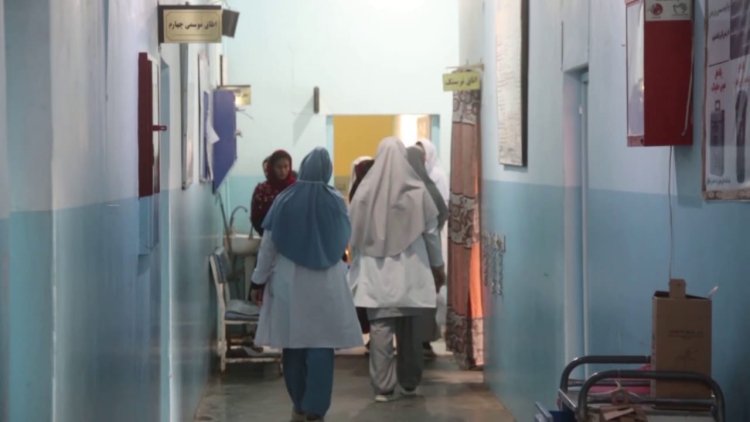
Gulsoom, 26, a midwife at a provincial hospital in Nangarhar, has experienced similar challenges.
“Due to my family’s financial struggles, job scarcity, and fear of dismissal, I have often stayed silent in the face of discrimination,” she says. “During work, I am harassed by male doctors and Taliban officials under various pretexts. Some time ago, a Taliban official asked me, ‘Young girl, why are you working instead of staying at home?’ Others have made marriage proposals or insulting remarks. If I complain, I could be fired. Life here is very difficult.”
She emphasizes that persistent harassment and discrimination have made it difficult for women to continue working.
“If I had another source of income, I would have left my job already. Every day, the workspace becomes more restrictive for women. What else can we do?”
Hangama, a teacher at a private school in Laghman, also complains about workplace double standards.
“Women face humiliation from supervisors, limited opportunities for advancement, and disregard for their skills,” she says. “Psychological and physical abuse are common, and these challenges have forced some women to leave their jobs. Women cannot openly express their problems. If we demand our rights or file complaints, we risk dismissal.”
Female activist Nafisa Wardak highlights the wider impact of workplace discrimination on women’s mental health. She says neglect and unfair treatment can lead to lack of motivation, depression, and hopelessness.
“Unfortunately, many organizations hire girls not based on talent but on appearance. This discourages women from pursuing education and skill development and exposes them to various forms of harassment in the workplace,” Wardak explains.
Discrimination in both government and private institutions, patriarchal traditions, family economic pressures, job scarcity, and social restrictions continue to challenge Afghan women’s access to safe and equitable employment opportunities.