From Washing Carpets to Tanks: A Childhood Memory in the Shadow of War in Afghanistan
In the villages and around towns, it is customary for people to wash their carpets in streams during the summer, and sometimes even in the dry, cold autumn. Girls and women gather together, spending hours scrubbing carpets while talking about their husbands, lives, hardships, and children. I always loved the simplicity and openness of the villagers’ emotions—they were pure, innocent, and only occasionally shared light-hearted gossip.
I remember going to a stream every afternoon with the village girls, a place everyone called “Masin.” The stream curved gently, with a road running along both sides. When the women finished their work, we would stay behind, sometimes trying to wash carpets ourselves—just wanting to be like the women of the village.
In the evenings, we would take the cows to drink from the stream. I would watch them in fascination—their golden-brown bodies, long eyelashes, and calm eyes are still vivid in my memory. Those days felt peaceful, at least for a child who had not yet known the real hardships of life. For the women, that place was far from paradise—it was endless labor. But for us children, everything seemed beautiful as long as we were young.
Sometimes, away from the eyes of fathers and brothers, we would swim in the stream, splash water at each other, and wait for our clothes to dry in the sun—without a single thought of danger.
Yet what remains most vivid in my mind is one day I still sometimes revisit. It was an ordinary day, standing by the same stream and slope, lost in my childhood world. I must have been no older than five. My sister was washing a carpet while I, with my short, bangs-cut hair, stood by a tree whose roots reached the water.
Back then, the sound of engines and heavy machinery was unusual—mostly a sign of danger, especially those that smelled of war. Every loud noise sharpened our ears and tightened our hearts. These sounds were reminders of war, of fleeing, of survival—a war with no end, with soldiers who were a mix of locals and foreign forces.
Suddenly, a loud sound came from the other side of the road, growing closer and making the ground tremble. My sister dropped the carpet and ran. The distance from the stream to our courtyard was short, and she reached it quickly. But I stayed, frozen and unaware. Tears ran down my face as if someone had washed it with water.
I stared in the direction my sister had gone, then realized the sound came from the other side of the road. When I turned, I saw tanks coming, one after another, down the road. My tears flowed even more.
On each tank, several men sat, wearing heavy clothes in shades of yellow, brown, and green, like cheetahs resting on a dry hill. They looked at me, and I, with tearful eyes, simply stared back—so small, not understanding why they were there or what war meant.
Six or seven tanks passed. The sound of their chains scraping the earth, and the smell of dust and smoke, filled the air. One soldier suddenly jumped off a tank and walked toward me. His steps were slow, yet somehow more frightening than any sound. My crying grew louder. He stopped a few steps away, seemingly unwilling to come closer. Then he knelt, lowering himself to my height. He took something from his pocket and held it out. I don’t remember if it was candy or a small toy. His hand hovered, waiting for me to come closer. But I only cried and stared. I couldn’t understand his words.
For a moment, he paused. Then his gaze softened. In that instant, I realized he was no longer frightening. Perhaps he was a father, remembering his own child. I took the candy—or toy—from his hand, and he smiled. Then, suddenly, he turned his head. The tanks made a sound, and he ran back in a hurry.
When they left, my sister returned, wiped my tears, and held me in her arms. I still remember her gaze—staring at what I held, while my tears had stopped, my eyes following the tanks as they disappeared.
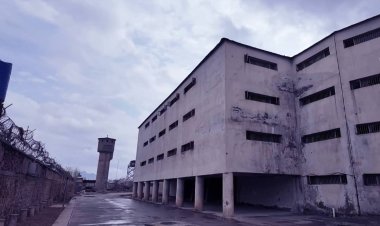
That image has never left my mind. Fifteen, maybe sixteen, years have passed, yet peace has never returned to that place. Time and repeated wars have destroyed it, leaving it like a decayed, lifeless body. The green trees, flowing streams, and grass are gone. Successive wars, and the presence of ground and air forces—from both the previous government and the Taliban—have destroyed the forests and homes.
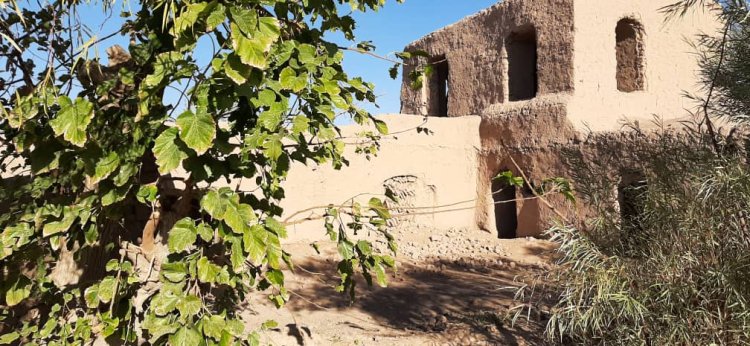
Every time I return to the village, I visit that place. The tree still stands, but the stream no longer holds its former beauty. The road’s slope is the same, but the trees are cut and dried. Yet I still see the little girl in my mind—on a long, silent road, among sorrowful people, and homes of which perhaps only two out of ten are inhabited… if even that.
_Farahnaz Noorzaey