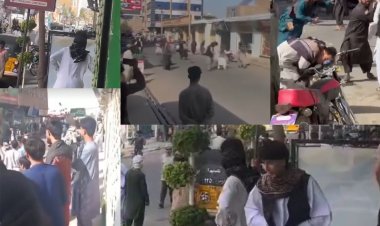
“The Taliban Tried to Take Me with My Daughter” – Taliban Crack Down on Women
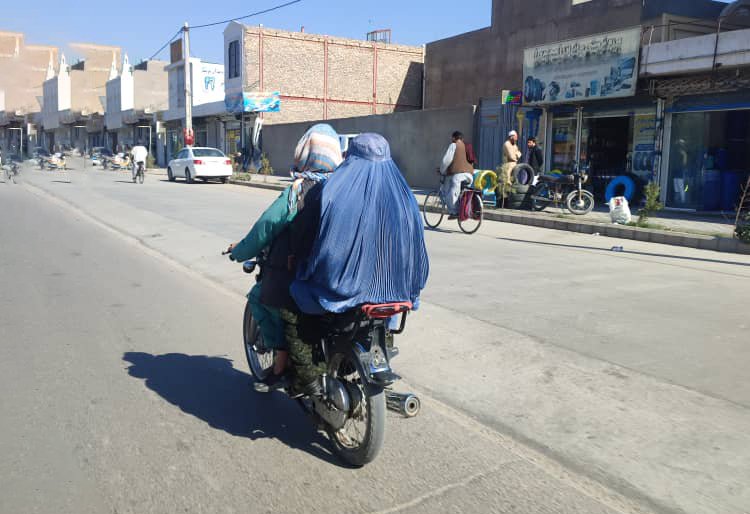
Last Tuesday, 25-year-old Somayeh, along with her husband and one-year-old daughter, was riding a motorcycle in Herat when they were stopped by the Taliban Amr bil Ma‘roof (religious enforcers).
She recalls the moment vividly:
“At an intersection, two officers in long cloaks blocked my husband’s motorcycle and forced us off. They asked my husband, ‘Aren’t you ashamed to let your wife ride on the back without a chador?’”
The Taliban then moved Somayeh and her daughter a few steps away while questioning her husband.
“They told him, ‘We have warned repeatedly that women must wear proper Islamic dress. Why are you ignoring this? We will take you to the intelligence office, and your wife and daughter to prison.’”
Somayeh says she clutched her daughter tightly, terrified, her eyes fixed on the officers’ guns and whips.
“I was shaking with fear, seeing no way out. I silently prayed we would return home safely and promised myself I would never go outside again. My husband was pleading with them, but the talib said, ‘You are not following Sharia.’”
Somayeh commutes daily to the hospital by motorcycle. She had been a nursing student, but with the closure of medical institutes in December 2024, her studies were left incomplete. She now works as an intern at a hospital.
She explains how the restrictions have made everyday life more difficult:
“We used to travel by rikshaw (tricycle), which was much easier. I would leave my daughter at my mother’s house, go to the hospital, and pick her up afterward. But since rikshaws were banned by the Taliban, commuting has become very hard. I sold my gold jewelry so my husband could buy a motorcycle.”
On the day of the incident, she was wearing a long black Abaya and a mask. Yet the Taliban claimed her dress did not meet “Sharia requirements.”
“My husband told them he is a teacher and asked them to let us go because of his work and our child. Finally, one Talib said, ‘Since your beard is long, we will let you go—but you must promise that your wife will not go outside without necessity.’”
Somayeh says that when they returned home, her husband reminded her to always wear a chador when leaving the house.
“My fear was all for my daughter. I haven’t gone back to the hospital for a week. Outside of the walls of home, there is nowhere safe for us.”
Reports indicate that restrictions on women’s dress in Herat have intensified in recent months, leaving many women anxious and fearful about their daily activities. Local witnesses and civil society activists say Amr bil Ma‘roof officers are present everywhere—in markets, at intersections, and even near medical centers—stopping and questioning women who are not wearing chadors.
Activists say these social and psychological pressures are part of a broader policy to limit women’s presence in public spaces. The consequences go beyond direct threats to women’s freedom, creating a climate of fear and psychological strain for entire families.