Girls' Stories: Unfinished Dreams Behind School Walls
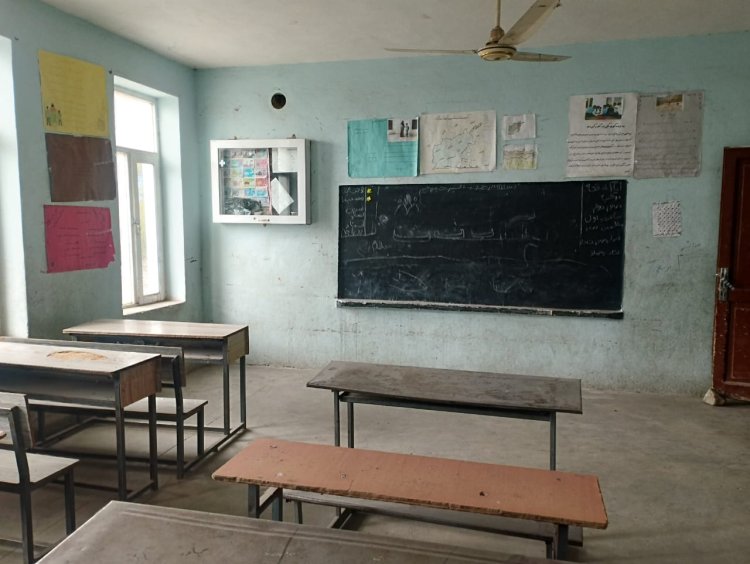
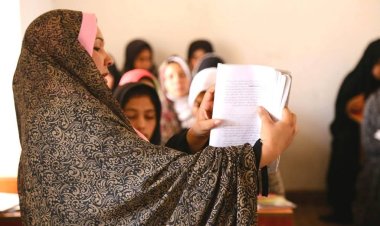
She writes on the board with a piece of white chalk. Fine dust gathers along the blackboard, leaving behind a pale line: “Uzra will become a teacher.”
I sit on a wooden bench, my heart beating faster than usual. My eyes follow the little girl. She stands beside the board, staring at her name and the word “teacher.”
I look at her and see myself in her. For a moment, it is no longer a Wednesday afternoon in the spring of 2026, but a spring morning years ago. And beside the board, it is not Uzra—it is me, holding a piece of chalk, my eyes fixed on the sentence: “I will become a doctor.”
Suddenly, her hand rests on mine. “Where have your ships sunk?” she asks.
She laughs and adds, “My mother says this whenever I think too much.”
She stands up again, facing the board. “I tell my mother—what else do I even have to think about that could drown me? My only fear is that in two years, I won’t be able to come to school anymore. Then my mother’s ships will sink too.”
She falls silent.
Then softly: “Okay… that’s enough.”
She closes her eyes and shakes her head gently. “You know, we study here—but not all subjects. Only science class.”
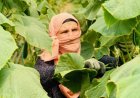
I look around the classroom. There are no desks, except for the one I’m sitting on. The floor is covered with two worn carpets—one red, one beige. Instead of walls, there are pieces of black fabric with white dots, tied around the trunks of grapevines. The ceiling is made of wooden sticks and vine leaves.
Uzra holds the edge of her coat, her hands trembling slightly. She sits on the red carpet. “These days, I sit here.”
Then she stands again beside the board. “But one day, I will stand here and teach girls.”
I can’t speak. My eyes feel dry. Wrapped in my black chador, with my mask pulled up beneath my eyes, I can only see Ezra’s white scarf. It doesn’t look like just a scarf—it feels like something larger, almost like a medical coat. I want to take it and wear it myself.
Uzra says quietly, “But the Taliban don’t allow us to study after sixth grade.”
Her delicate lips stop smiling. Her almond-shaped eyes seem to blend with the cloudy sky.
She hugs her schoolbag tightly. “Today, one of the girls who finished sixth grade came to school. Our English teacher was there too. She threw herself into the teacher’s arms and cried. The teacher cried too and said, ‘What a loss… these girls…’”
I look at her face, at her pale lips. I want to say—enough… don’t talk about crying… don’t talk about these restrictions…
But suddenly, her tone changes, and her eyes light up again. “Do you know what? My father is a senior Taliban member.”
Surprised, I ask, “Where is he?”
She plucks a few vine leaves and holds them in her hand. “He went to Iran. Listen, I’ll tell you something—but you mustn’t tell anyone, okay?”
She takes my hand, smiling, pressing it with both of hers. “You promised—you won’t tell anyone.”
Then she whispers, “In winter, when I finished third grade, I used to cry at night. I only had three more years left in school. That night, my father wiped my tears and said he had made an arrangement with the Taliban. He said he gave them some money so girls could continue going to school.”
After a short pause, she continues, “When I finish sixth grade, my father will come back—so I can keep studying… and other girls too. That’s good, right?”
When she finishes speaking, she runs outside. I smile at her innocent hope, but inside I think—may her father not fail her in two years.
Uzra returns after a moment, washing the vine leaves and putting them into her mouth. “I couldn’t have breakfast today. Other days, my mother gives eggs or potatoes… but today there was nothing.”
She chews the leaves. Her expression changes—first sour, then bitter.
She puts her bag over her shoulder. “Don’t tell anyone what I said… my mother will scold me.”
She says goodbye. “I’ll go to the playground until my brother is dismissed.”
She leaves, and I am alone.
Suddenly, her voice returns in a whisper near my ear: “If my father doesn’t come back, I’ll climb over the wall and come to school myself… but he will come back. He promised.”
She laughs and disappears. This time, she doesn’t return. I remain, watching the leaves drift aimlessly in the air.
The school bell rings. I take my niece’s hand and walk toward home.
She asks, “Will you keep bringing me to school?”
I look back at the cold, empty space and say, almost without thinking, “Yes.”
Facing the school, I whisper: “How do you endure this emptiness… this cold… this absence…?”
We step outside. There is no sign of the girls with white scarves.
— Saeeda Saee