Former Teacher Sells Books in Jalalabad After Losing Her Job
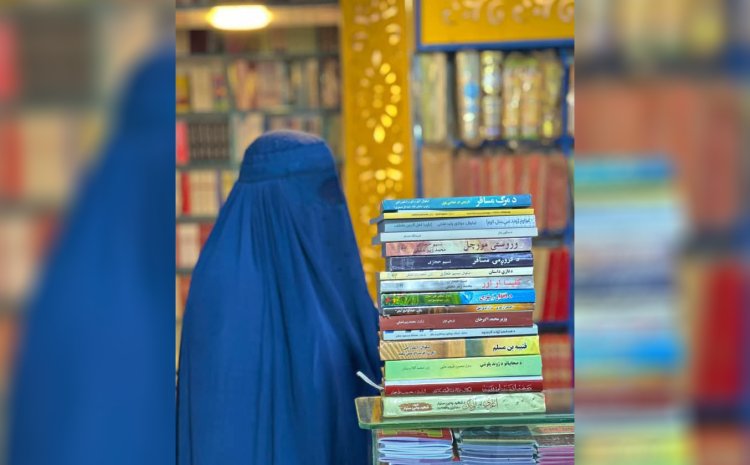
In the early morning, as Jalalabad slowly comes to life, Zarmeena pushes her wooden cart to the roadside. The wheels creak against the asphalt, and in the soft light of dawn, the books on her cart begin to emerge.
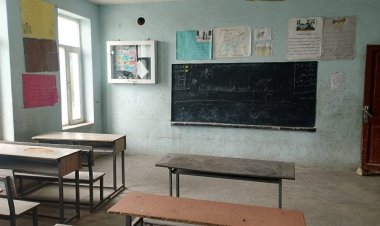
The 58-year-old woman once started her mornings in a classroom, teaching school students. Today, she walks the same streets—but no longer as a teacher. Instead, she sells books by the roadside, moving through traffic, dust, and uncertainty.
Zarmeena lost her job after the return of the Taliban to power. Now the main provider for her five-member family, she begins each day with a simple goal: to sell enough books to get by.
“I was a teacher for many years,” she says. “But I lost my job when the Taliban came to power. I had to find a way to survive. It has been three years since I started selling books.”
She earns between 10 and 20 Afghanis (about $0.15–$0.3) per book. On a good day, her total income reaches around 150 to 200 Afghanis (about $2–$3).
She gently runs her hand over the books on her cart.
“These books are not just for selling,” she says. ”I want to keep a culture of reading alive in our society, especially for girls who are currently deprived of education.”
Her work, however, has come with risk. She says she has been detained several times by Taliban morality enforcers and faced harassment and threats.
They detained me several times and asked why I was working,” she says. ”I was threatened and mistreated. Of course I was afraid… but if I stop, who will continue?”
Zarmeena says that under current restrictions, it is extremely difficult—and often impossible—for women to work in public spaces. Still, she has no choice but to contribute to her family’s income.
“Some people encourage me and even pay more for the books. Others look at me as if I am doing something wrong. But I believe women have the right to work and study. We must stand up for our rights,” she says.
Her greatest hope is the reopening of schools and universities for girls in Afghanistan.
“Now that schools and universities are closed, girls should not lose hope,” she says. ”They should read, learn skills, and use whatever opportunities remain available.”
Gesturing toward the books on her cart, she adds: “Everything starts here—with books and knowledge.”
With a quiet smile, she says: “Every day I wake up hoping this situation will not last forever. One day, I will no longer stand by the roadside. I will be in front of a girls’ school, selling books there.”