A Lifeline in Childbirth: The App Helping Afghan Midwives Save Lives
Maternal and newborn mortality remains one of the most pressing public health challenges in Afghanistan. According to the World Health Organization (WHO), in 2020, the maternal mortality rate was estimated at 620 deaths per 100,000 live births—meaning nearly 24 women died each day due to pregnancy- or childbirth-related complications.
A shortage of trained midwives, the lack of obstetric specialists, and limited access to quality health services—especially in remote areas—are major factors behind this crisis. Following the Taliban’s return to power in 2021, restrictions on women’s education and employment further reduced the maternal and child health workforce, raising serious concerns about the future of childbirth services.
In 2023, the United Nations Office for the Coordination of Humanitarian Affairs (OCHA) reported that Afghanistan had 669 maternal deaths per 100,000 live births, one of the highest rates in the world. The UN has warned that if international support continues to decline, maternal mortality could increase by up to 50 percent by 2026, highlighting the urgent need for innovative solutions to improve childbirth care.
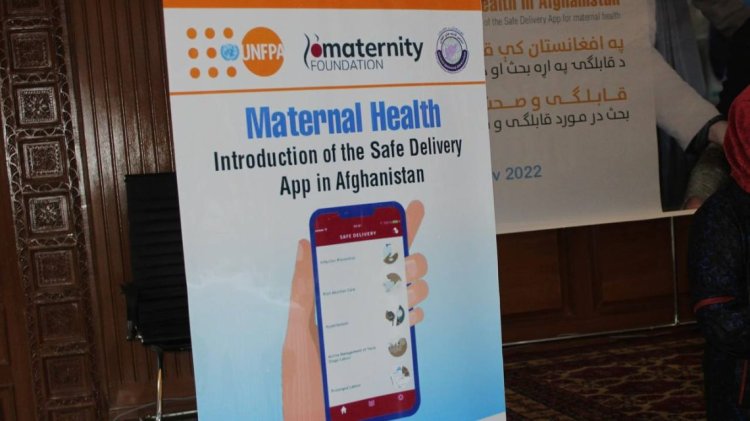
One such solution is the Safe Delivery App (SDA), a mobile application designed to strengthen midwives’ knowledge and skills and provide safe care for mothers and newborns. The app includes evidence-based clinical guidelines, step-by-step videos on managing childbirth and related emergencies, interactive learning resources, user assessments, and offline access for areas with limited internet. It helps midwives make accurate and timely decisions even with minimal resources. The Persian version of the app has been available to health workers since 2022, particularly in remote districts.
In a practical example reported by the United Nations Population Fund (UNFPA), a midwife named Freshta at a UNFPA-supported Family Health House in Maiwand district, Kandahar, cared for Kafia, a 35-year-old expectant mother with a history of heavy bleeding in five previous births, making her labor high-risk. Using the Safe Delivery App before the delivery, Freshta reviewed postpartum hemorrhage management and prepared the necessary medications. When Kafia gave birth to a three-kilogram baby boy, Freshta was fully prepared and, with the app’s guidance, prevented a potentially life-threatening complication.
In Kapisa province, midwife Parween faced another emergency when a mother arrived with a premature newborn weighing only 1.1 kilograms. According to UNFPA, Parween used the Safe Delivery App to guide the family on safely caring for the fragile baby. Initially, the family resisted transferring the newborn to a hospital, but the app’s instructional videos convinced them. A few days later, the baby had gained weight and stabilized, and the family said the app’s guidance had saved their child’s life.
Beyond individual cases, the Safe Delivery App helps midwives across Afghanistan share experiences and strengthen their skills. UNFPA reports that the app’s educational library, interactive videos, and communication tools boost midwives’ confidence in managing both routine and emergency deliveries, helping save the lives of mothers and newborns in remote areas. Midwives report that the app has become an indispensable part of their daily work, significantly improving their ability to respond to emergencies.
The Safe Delivery App is available for free on the App Store and Google Play. It can be installed by searching for “Safe Delivery” by the developer Maternity Foundation.