After March 8: What Afghan Women Still Endure
Today is March 10, two days after March 8, International Women’s Day. I am sitting in a crowded minibus, thinking about the fact that I wrote nothing for Women’s Day this year.
The minibus stops and another passenger gets in. The door opens and a cold wind slips inside.
The woman sitting by the window says with a faint smile, “The weather has turned cold again.”
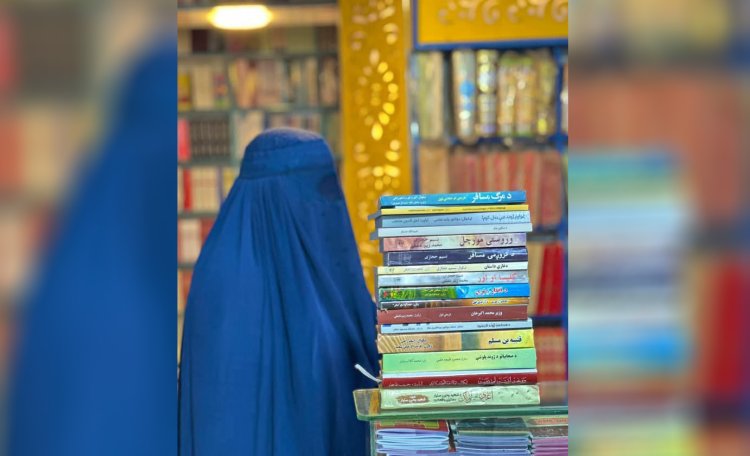
I lean forward a little to see her face more clearly. She smiles, revealing a decayed canine tooth. In my hands is the book Snake Charmer. She looks at it and asks, “So they still allow you to read books?”
At first I don’t understand what she means. It feels as though I am wandering somewhere far away. I ask her to repeat it.
This time she says, “I mean the Taliban. Don’t they take your books?”
For a moment, my mind drifts away from Afghanistan, and I answer almost absent-mindedly.
“No… I mean, do they want to forbid it?”
It seems I have forgotten—forgotten that in this country, awareness itself is forbidden for women and girls.
Her name is Leila. She shifts her gaze from the book to my face, then up to the sky that looks ready to rain. It is as if her eyes are searching for a way to release the sorrow inside her.
She takes a deep breath and turns to me.
“Don’t you live here?” she says. “It’s been a long time since they stopped girls from studying. The Taliban have become a curse on our lives.”
Her words pull me away from my book and from myself. Quietly, almost to myself, I whisper:
“No. I’m not living anymore. I’m only alive.”
Leila places her hand on mine. The warmth of it feels like a sudden spark of fire. Her voice trembles as she continues.
“My dear girl, yesterday until one o’clock I saw doomsday with my own eyes.”
She pauses and swallows. All the women in the minibus are looking at her now. Even the men’s voices fall silent.
Leila slowly shakes her head.
“I have two sons. One is eight, the other ten. The day before yesterday the Taliban took my ten-year-old and locked him up.”
A shiver runs through my whole body. I clutch my book tighter, as if I myself am trying to break free from a prison.
Leila pulls her black prayer chador further over her red scarf.
“From the day before yesterday until yesterday at one,” she says, “all I did was cry.”
“Why did they imprison him?” I ask.
Tears run down her face.
“My two boys work as windshield cleaners in the city. They clean car windows. I can’t work. They earn money for our home. But the Taliban won’t allow it. The day before yesterday they chased them both. They caught one.”
She pauses for a moment.
“Yesterday they brought my Hamid back,” she says quietly. “They had shaved his hair. I told him he doesn’t need to go back to work anymore. But he said he will go. He said now that they have shaved my head, I will go.”
Now Leila seems to forget herself. She no longer speaks as a mother, but in the voice of her son.
“Hamid told me: Mother, there were many children in the prison. Everyone kept scratching their heads, their clothes were dirty. At night they brought us rice with a little meat, but I couldn’t eat it.
Mother, we hardly ever buy meat. When they said there was meat, I thought about you. I couldn’t eat it while you might only have bread and tea.
But when I looked at it… I threw up. It looked as if someone had already chewed the meat and left it on the rice.”
Leila falls silent.
Everyone else is silent too. The only sound inside the minibus is her voice echoing in the stillness. It feels as though no one is breathing.
She presses a hand against her chest.
I look at Leila’s face. My book is still clutched tightly in my hands. The other women murmur their sympathy.
Leila speaks again.
“God is my witness,” she says, “sometimes I wish the war would start again. That America would drop a bomb and destroy everything. This is not life.”
I look at her sunburned face. A few strands of hair fall across it, and she quickly hides them under her scarf.
Then she smiles.
She reaches out and touches my book. Her breathing becomes calmer, her smile softer.
For a moment she strokes the book gently, as if it were a newborn child.
“Good,” she says softly. “Read. I wish I had studied too…”
My heart begins to beat faster. My voice refuses to come out. I have to get off the minibus, but a lump has closed my throat.
I tap on the door.
The driver asks, “Getting off?”
I nod.
I step out. I do not look back at Leila. But I know her eyes are still following the book in my hands.
And inside my heart, through silent tears, I whisper:
“This is how the Taliban celebrate March 8 for Leila.”
_Saeeda Saee