Forced to Leave, Forced to Return: An Afghan Woman’s Story
Two years ago, at eight in the evening, 21-year-old Afsaneh wrapped five sweet breads in plastic and, with her husband, took one last look at the house where she had recently become a bride.
A resident of Guzara district in Herat, she recalls that in the first months of her marriage, her husband lost his job, and the household expenses were temporarily covered by her sister-in-law. A year later, with no work to be found and no hope of staying, they made the difficult decision to leave Afghanistan for Iran via a smuggling route.
Afsaneh spreads out the black hijab she made herself on the floor to iron it and continues:
“My husband worked in an office, and I had finished grade 12 and wanted to go to university. But there were no jobs, and school was impossible. My husband found a smuggler, and hoping for a better future, we set off for Iran.”
The dangers were not only from outside. Afsaneh says women on such journeys fear not only the Taliban or armed groups but also harassment from smugglers or fellow travelers.
“The smuggler guided us through Pakistan. There were fifteen of us in the group, and I was the only woman. In Pakistan, we had to spend one night in a house — and once again, I was the only woman.”
Exhaustion had drained her strength to stay awake, but sleep offered no safety. That night, neither she nor her husband could rest.
“My husband was beside me, and I hid under my chador. Two men from our group gave him a knife. They said that if anyone attacked, killing would be the only way to defend ourselves.”
After days of walking and short stops, the route led them to open plains that the smugglers spoke of cautiously. Afsaneh recalls that it was not yet fully dark when their group was stopped.
“A group the smugglers called ‘Lashkar-e Jendullah’ blocked our path. They lined everyone up, one by one, took money from the men, and then asked everyone to recite Qul A‘udhu and the Qunoot prayer.”
Though the questions seemed simple, a wrong answer could end the journey. Afsaneh says anyone who did not know the prayers or recited them incorrectly was immediately singled out:
“They would say, ‘He’s Hazara, he’s Shia,’ and then separate him from the line. No one dared to ask what would happen to them.”
Before entering Iranian territory, the smuggler combined them with several other groups. To avoid the eyes of the Iranian police, the migrants followed instructions, rolling on the ground or running past guard towers.
With tears in her eyes, Afsaneh continues:
“The smuggler shouted, ‘Move!’ Everyone ran across the plains. At that moment, a car hit a woman carrying a child, and another vehicle ran over them. No one stopped to help.”
After twenty nights and days, Afsaneh and her husband finally reached Tehran. Her husband remained unemployed for two months, and they stayed in her sister’s home — her sister had migrated to Iran three months earlier.
“We couldn’t cover our expenses. I was ashamed to ask my sister for money. My mother-in-law sent us three million tomans. Later, we moved into a garden house. My husband worked as a delivery rider at a shop, and I worked in a tailoring workshop.”
But stability did not last. The widespread deportation of Afghan migrants from Iran abruptly pushed many families — who had lived for years in fear but with an income — back to square one.
“We returned to Herat,” Afsaneh says. “Some days my husband earns 350 to 400 afghanis as a laborer. I also do tailoring, but it isn’t enough to cover our household expenses — rents have gone up.”
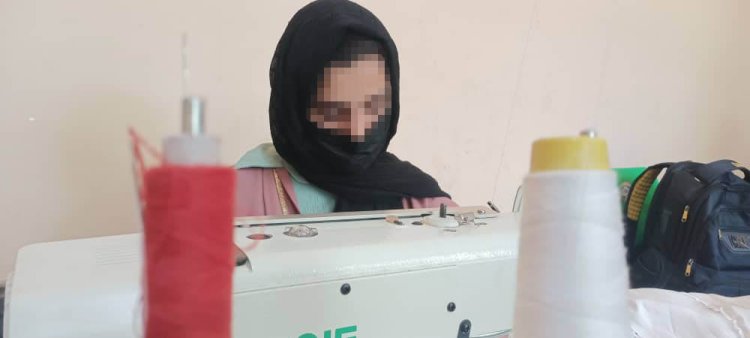
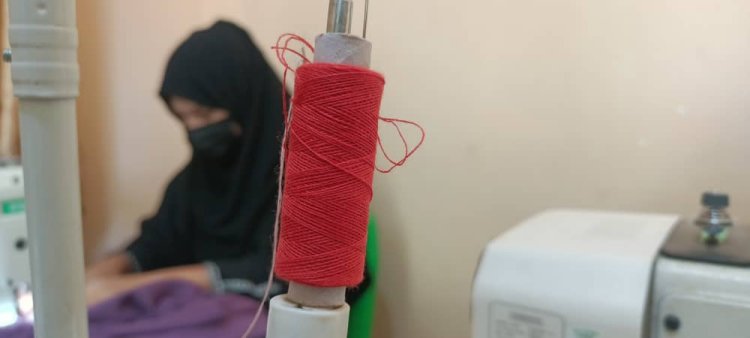
Afsaneh sits behind her sewing machine again. The sound of stitching fills the room. She says that if there is a way, she would leave again — not out of ignorance of the dangers, but simply to push her life forward from this point.