Drinking Water Remains a Daily Struggle for Afghan Returnees
In recent months, returning Afghan migrants from Pakistan and Iran have been hit by a worsening shortage of clean drinking water, as thousands of families struggle to survive in overcrowded settlements with limited services, where access to safe water has become one of the most urgent daily challenges amid prolonged drought, declining rainfall, and rapidly falling groundwater levels across large parts of Afghanistan.
In Kabul, falling groundwater levels have intensified the crisis. Many of the areas where returnee families have settled lack reliable access to safe drinking water and other essential services.
Ghorzang, who recently returned from Iran and now lives in the Ahmad Shah Baba area of Bagrami district in Kabul, says access to clean drinking water for returnees is extremely limited and far below existing needs.
He says the shortage of water has also reduced water distribution efforts in several areas: “Most returnees are facing serious economic difficulties. Alongside other daily expenses, many families cannot afford to buy clean drinking water every day. Because of this, many people rely on well water, and both children and adults have become sick with diarrhea and other illnesses.”
The shortage of safe drinking water is not only an economic problem; it also carries serious health consequences, including the spread of infectious diseases, digestive illnesses, and increased pressure on women and children.
In Nangarhar province, particularly in an area known as “Kabul Camp,” the situation is especially alarming. Groundwater levels have declined significantly, and in many places the water has become saline and unsafe for drinking. Many returnee families are forced to buy drinking water at high prices, adding further pressure to already fragile household incomes.
Ghulamullah, who returned to Afghanistan around a month ago through the Torkham crossing with his eleven-member family, says access to clean water remains one of their biggest challenges.
“There is no proper drinking water here. Every day we buy 20 liters of water for 30 Afghanis. Groundwater levels have dropped, and even the available water is not drinkable. Returnee families have almost no access to clean water,” he says.
In the same area, Mohammad Salim says he faces similar difficulties. Living in a rented house, he explains that he cannot regularly afford to buy water.
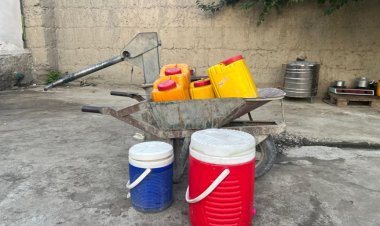
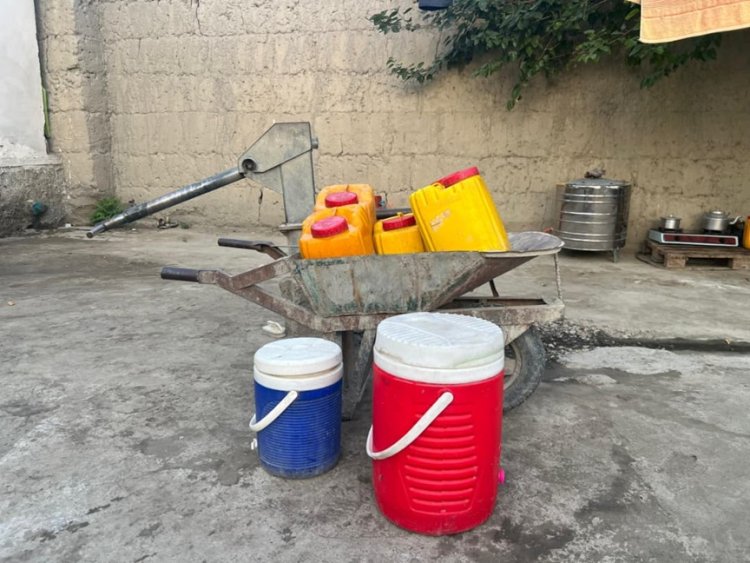
“Every day I walk for nearly an hour and bring water using a handcart. Our well is 90 meters deep, but the water is not safe for drinking. We have no other choice,” he says.
In many communities, women are primarily responsible for collecting water for their households. Many walk long distances or spend large amounts of money to secure water, adding to their physical exhaustion and emotional stress.
Farzana, 38, who recently returned from Pakistan with her five children, is one of many women carrying this burden alone. She says she has no one to help her collect water and cannot afford to buy it.
Now living in the Daman area of Jalalabad, she says: “My husband died years ago in Pakistan. I am forced to bring water from another area because we cannot afford to pay for it.”
According to Farzana, a local charity recently installed a temporary water pipeline in the area, but it is far from enough to meet people’s needs, forcing residents to wait for hours to collect water.
Among the returnees are also children who have become responsible for supporting their families.
Thirteen-year-old Shahidullah lost his father in a traffic accident in Pakistan and now carries much of the responsibility for his household. He lives with his mother and three sisters in the Samarkhail area of Behsud district and says he brings drinking water from distant areas every day.
“Every morning and evening I walk for about 30 minutes and bring four containers of water using a cart. We cannot afford to buy water, and the water from our well is salty,” he says.
Officials from the Taliban’s Ministry of Refugees and Repatriation say drinking water has been supplied to returnees in some areas and that efforts are ongoing to expand assistance. However, field reports indicate that existing support remains far below the growing needs of returnee communities.
As returnee families struggle to rebuild their lives, many now face multiple overlapping crises: lack of shelter, poverty, limited healthcare, and above all, a severe shortage of safe drinking water.