
Behzad’s Miniature Style Registered as Afghanistan’s Intangible Heritage by UNESCO
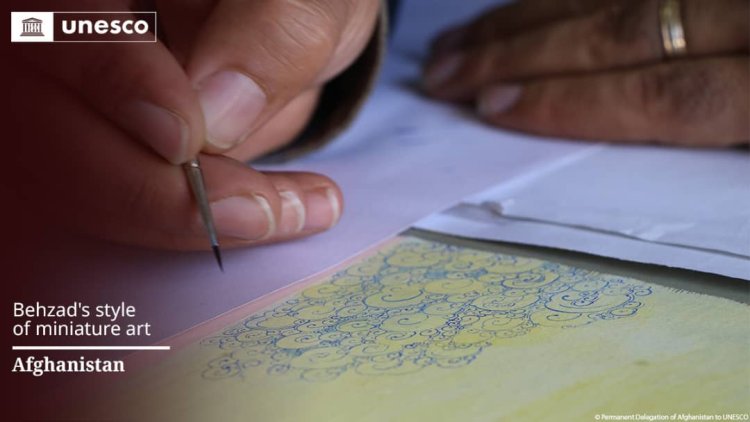
UNESCO has officially registered the “miniature style of Kamal ud-Din Behzad” under the name of Afghanistan on its Representative List of the Intangible Cultural Heritage of Humanity. The decision was approved during UNESCO’s 20th session on intangible heritage in New Delhi. It is considered one of Afghanistan’s most significant cultural achievements in recent years.
Kamal ud-Din Behzad, a prominent master of miniature painting from Herat, is regarded as one of the most influential figures in the history of miniature art. Born in the mid-9th century AH in Herat, he introduced innovations in narrative composition, color application, and line work, establishing an independent school that later became known as the “Behzad style” and gained worldwide recognition.
According to UNESCO, miniature art is a precise and symbolic representation of historical and literary scenes, with a central role in connecting communities to the elements of their culture, history, and literature.
UNESCO added that many contemporary artists across the region and the world continue to draw inspiration from Behzad’s compositions and visual style, using his approach as a model in miniature workshops to this day.
The organization also noted that miniature art contributes to preserving Afghanistan’s cultural fabric and plays an important role in fostering a sense of identity, social cohesion, and mutual respect among communities.