Women in Herat under Taliban Pressure on Hijab and Movement
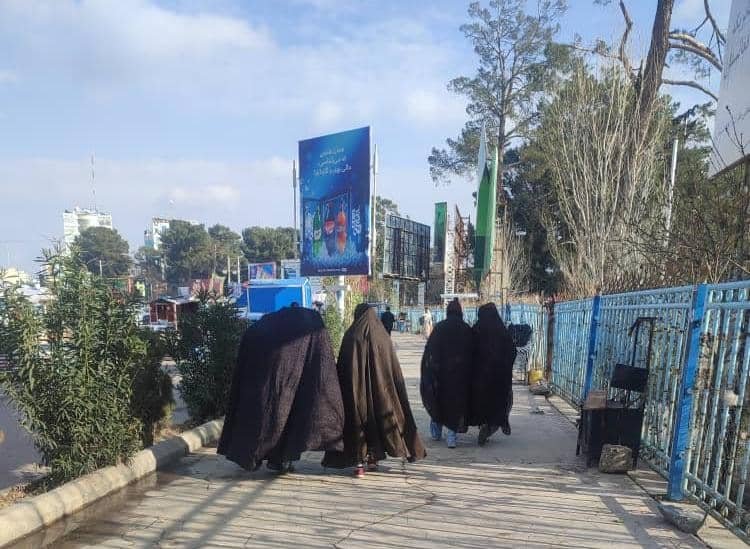
Sara left her house that day like any other, wearing a long coat, scarf, and black mask. Near the Great Mosque of Herat, two voices called from behind: “Stop!” She froze. Two Taliban officers in white robes approached, rifles on their shoulders and black whips in hand. Instinctively, she pulled her scarf closer.
One of them asked, “Where is your chador?” Sara wanted to say she was wearing proper hijab, but her throat went dry. Another shouted, louder: “Aren’t you ashamed, dressed like this?” She tightened her scarf and adjusted her mask. “My hijab is correct,” she said. The Talib replied, “Hijab isn’t complete without a chador. Consider this your last warning.”
Sara walked on with trembling hands, a grief lodged in her throat for four and a half years. She was tired, angry, scared, and resigned.
In the minibus, she sat among other women. Conversations swirled around chadors. The driver spoke to another man: “Women without chadors will be asked to get off the vehicle.” Sara remembered the previous week, when a taxi driver told her he could only take her halfway, just before a Taliban checkpoint. When she asked why, he said they had been instructed not to take women without chadors. She had been forced out mid-route.
Sara listened to the women discussing what to do: “I won’t leave the house unless I have to.” “Soon they will say we cannot go out without a male guardian.” “They want to block women from the streets.” She realized that, beyond university and work, even the city streets themselves were being taken from her.
Two days later, she left again, this time with a chador in a plastic bag. Step by step, she wrestled with herself: should she wear it or not? She did not want another confrontation with the Promotion of Virtue. News of women being arrested in Kabul kept replaying in her mind. If they take me, what will happen? What will my family do? What will people say? Yet she did not want to put the chador on—she refused to obey the Taliban, wanting to preserve even a tiny shred of freedom.
Seeing other girls without chadors gave her a moment’s relief. She resolved not to wear hers. As she passed Cinema Square, a voice suddenly called: “You three, come here!” Her steps faltered. The Talib shook his whip and gestured sharply. Several other girls in coats were lined along the wall. Sara joined them, clutching the plastic bag tightly.
“Where is your chador?” he asked. A tall girl in a black coat said, “We are wearing hijab.” The Talib shook his whip again. “This? Short, tight clothes? Do you even understand sharia?” The girls nodded. “Hijab according to sharia fully covers your head and body,” he said.
Sara’s hands and legs shook. What if this is my last chance? What if they take me now? She glanced at the pale faces around her. Girls murmured apologies: “We’re sorry. We’ll be more careful from now on.” “We will wear hijab properly.” The confirmations repeated, small and anxious.
The Talib barked, “No more warnings. Last chance.” He gestured toward several more girls approaching.
Sara walked on, clutching the plastic bag tighter. Her gaze was fixed on the ground. Tomorrow—should I wear it or not?