Women Beggars— Victims of Taliban Torture and Sexual Abuse
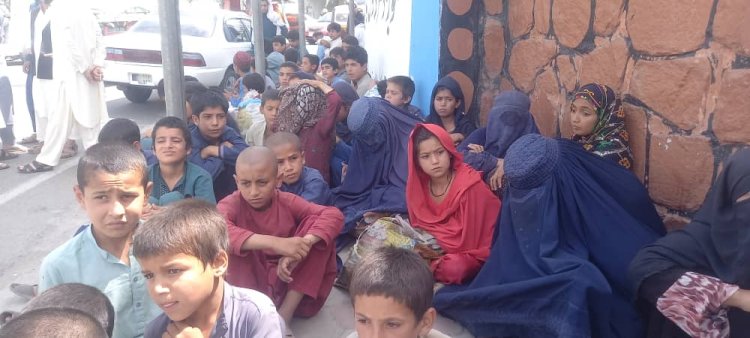
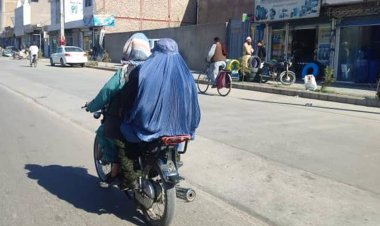
In Kabul, several women who beg on the streets say the Taliban have been detaining them under the pretext of registration and biometric data collection, promising them food and financial aid, only to transfer them to so-called “rehabilitation” centers.
The women say that not only were those promises never fulfilled, but that they were also subjected to physical torture and sexual abuse during arrest and detention. According to them, the Taliban exploit their poverty and vulnerability for their own purposes.
Zarafshan, one of these women, says: “When we refused to obey the Taliban’s demands, they threatened to keep us in prison for months and to deprive us of the promised aid.”
Zarafshan, a young woman forced by poverty to beg on the streets of Kabul, recounts her harrowing story of sexual abuse by Taliban members. She says the Taliban routinely detain women who beg in different parts of the city and take them to a facility known as “Islah” (“Rehabilitation”), which operates under the Taliban’s Prison Administration.
“When the Taliban arrested me along with four other begging women, they took us to a place called ‘Islah.’ Around midnight or 2 a.m., Taliban members would come to the women’s section, enter the rooms, and take women one by one to other rooms,” she says in a trembling voice.
Zarafshan recalls that she was held there for several nights, during which she was repeatedly beaten and sexually assaulted. “If women refused their demands, they would torture us and threaten to keep us in prison for months and cut us off from any aid,” she says. “In the end, through force and torture, they made us submit to what they wanted.”
After her release, she says, she still lives in constant fear of being arrested again and has to beg in secret:
“I have no one to support me. By begging, I earn between 100 and 200 Afghanis (about $1.30–$2.60 USD) a day. If they catch me, they’ll send me back to that same place and torture me again. Fear and horror are always with us, but I have no other way to survive.”
Gulmina, another woman who has been detained twice by the Taliban under the same pretext, says no woman in the “Islah” center is safe from sexual abuse.
“One night, two Taliban men came into the women’s block, walking around the rooms and saying, ‘We want a young, energetic woman.’ They took me and another woman out, saying, ‘The Amir wants to see you.’ They brought us to another room and made sexual demands. When we refused, they beat us and threatened that we would not be released unless we obeyed. Then they raped us by force.”
She adds that harassment is not limited to the Taliban. Even on the streets, begging women and girls are sexually harassed by men:
“When we beg in the city, some men make sexual advances, and the Taliban also harass us under the guise of biometric registration. Most women detained in that center are raped, but the Taliban warn us that if we speak about it, we will be imprisoned again and lose all aid.”
Some women also complain that although the Taliban have registered and taken their biometric data, they have never received any of the promised assistance.
Kamela, a 45-year-old woman responsible for six daughters, says:
“I have no guardian at home. If I don’t beg, my family will starve. The Taliban’s Red Cross department took my biometric data and promised monthly food supplies and 3,000 Afghanis (about $40 USD) in cash aid, but eight months have passed, and I haven’t received anything.”
She adds that without any source of income or support, begging women are forced to return to the streets, constantly facing Taliban threats and restrictions. “The biometric process is just a tool of control,” she says. “Their promises have never been kept, while women continue to beg in the streets to feed their families.”
Meanwhile, in November 2024, The Guardian published a report revealing that women detained by the Taliban in Kabul under the pretext of registration and biometric data collection had been subjected to extreme violence inside Taliban-controlled prisons. The report documented cases of rape, physical torture, forced labor, and death threats. It also noted that some children were beaten and abused inside these facilities.