Poverty and Discrimination: Life for Women with Disabilities under the Taliban Rule
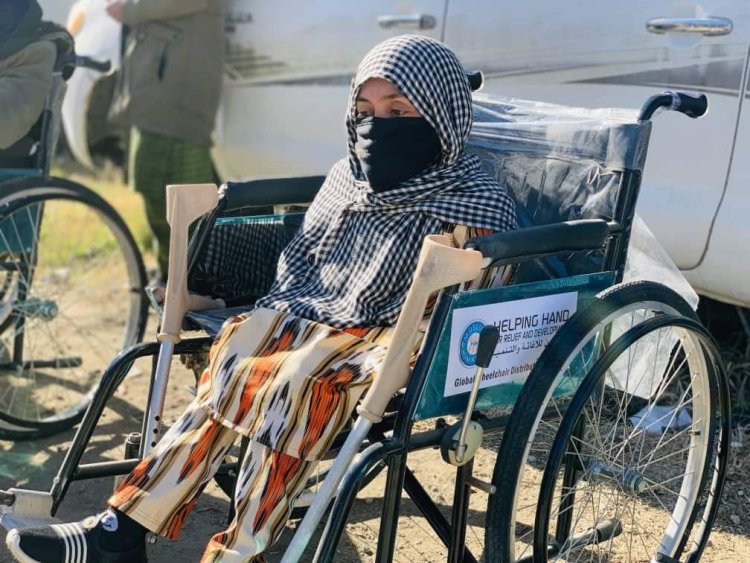
Since the Taliban’s return to power, Afghan women with disabilities have not only been deprived of job opportunities but have also faced severe social restrictions and a lack of essential support. Some of them say their annual stipends have dropped from 60,000 afghanis (around $850) to 17,000 afghanis (around $240), and in many cases, payments are delayed or have been completely cut off.
Moqaddasa, a 46-year-old woman who lost both legs in a landmine explosion, spends her days sitting by the roadside in Kabul selling plastic bags. Her daily income ranges from 100 to 150 afghanis ($1.40–$2) — an amount barely enough to cover her basic needs. Many days, she returns home empty-handed.
She says that since the Taliban took power, life has become extremely difficult, and she has been forced to earn a living through street vending.
“Before the Taliban, the government would pay my annual salary of 60,000 afghanis on time every year. But since they came, I’ve only managed to receive it twice, and it was reduced to 17,000 afghanis.”
Moqaddasa adds that nine months have passed since her last payment was due. She has visited the Directorate of Martyrs and Disabled Affairs several times but received no response.
“Even though I have a disability ID and a bank card, the Taliban insult and humiliate us. They say a woman has no right to receive her salary and must bring a mahram. And even when we do bring one, they still find excuses.”
She also complains about the lack of social assistance, saying she hasn’t received any help from aid organizations for months and has no one to rely on.
“Most women with disabilities don’t have a guardian and face severe economic problems. There’s no support for people with disabilities in our country, and we’re treated with deep disrespect.”
Kobra, a resident of Parwan province, lost one of her legs in a landmine explosion 18 years ago when she was still a school student. Despite her disability, she completed her bachelor’s degree in computer science and worked in a government office — until the Taliban took over and dismissed her from her job.
“Before, I never saw myself as weak. Despite my disability, I studied, found a job, got married, and now have four children. My husband is also disabled, and both of us lost our jobs after the Taliban came. Life has become extremely difficult for us.”
According to Kobra, during the previous government, there were efforts to create job opportunities for women with disabilities in state institutions, but all such programs were halted after the Taliban takeover.
She emphasizes that women with disabilities across many provinces are capable of working, but no official or private institution provides them with opportunities:
“We have the ability — we just lack the opportunity. Without work or support, life has become unbearable.”
One of her major complaints is the reduction and delay of disability stipends.
”We used to receive 60,000 afghanis each year, but now the Taliban only pay 17,000 — and that too comes late. In the past four years, I’ve received it only once. I’ve gone to the Directorate of Martyrs and Disabled Affairs in Parwan many times, but no one responds to us.”
According to official figures from the Taliban-run Ministry of Martyrs and Disabled Affairs, there are 694,978 registered people with disabilities in Afghanistan, including 49,784 women, 16,247 of whom are blind. Social activists say these numbers represent only a fraction of the reality, as many people with disabilities, especially in remote areas, remain unregistered.
Women with disabilities in Afghanistan live at the intersection of poverty, discrimination, and social exclusion. In a society where women’s public presence has been severely restricted, those living with disabilities are deprived even of their most basic human rights.