The Only Female Doctor Serving a Remote Afghan District
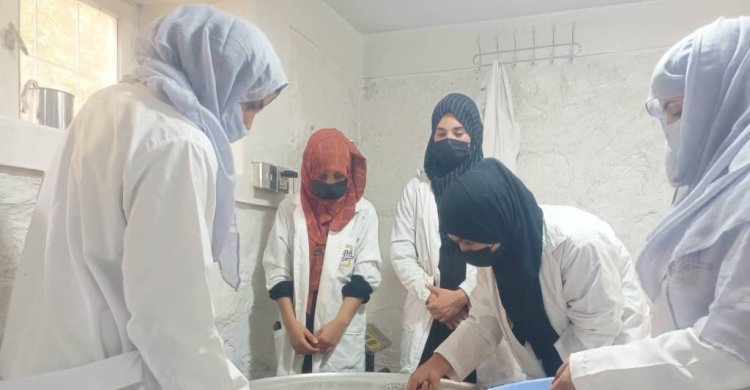
In Alingar, a remote district of Laghman province, poor roads and deep poverty make access to healthcare a daily struggle. For pregnant women, survival often depends on one person: Dr. Shakila Momand, the district’s only female doctor.
Dr. Momand, 30, originally from Mehtarlam, Laghman’s provincial capital, completed her medical degree at Nangarhar University. She initially worked in the obstetrics and gynecology departments of Laghman and Nangarhar hospitals. Nearly seven years ago, she opened a small private clinic in Alingar—modest in resources, yet essential to the local community.
“I have personally assisted in hundreds of successful deliveries,” Dr. Momand says. “When a mother’s pain eases and a healthy baby is born, all my exhaustion disappears. Even on sleepless nights, seeing a patient recover gives me the strength to continue.”
Her career choice was shaped by personal tragedy. “My mother died during childbirth because there was no female doctor,” she recalls. “From that day, I decided to become a doctor and serve women. Despite all the difficulties, I feel I have kept that promise.”
Despite receiving multiple job offers from private institutions and other organizations, Dr. Momand has chosen to remain in Alingar. “Patients have no alternative,” she says. “Money does not matter. What matters is that a woman survives childbirth and a baby is born healthy.”
Dr. Momand also has teaching experience at health institutes. She says she would be willing to teach for a year without pay if girls are allowed to return to universities and semi-higher medical education. “My greatest concern is that if girls remain excluded from education, the damage will directly affect the healthcare system,” she warns.
Healthcare in Alingar and other districts of Laghman is critical. Pregnant women in remote areas often suffer from severe anemia and lack access to regular medical facilities or the financial means to reach hospitals. “Most women are not brought to health centers during childbirth, and this is why maternal and infant mortality has increased,” Dr. Momand explains.
Lack of awareness compounds the problem. Many families have little knowledge about prenatal care, birth spacing, or postnatal health. “With basic education and simple recommendations, many of these health problems could be prevented,” she says.
Homeira, a pregnant woman from Alingar, highlights the shortage of female doctors as a major issue. “For us, Dr. Momand is hope,” she says. “She serves women day and night. Most children in this area were born with her help.”
Residents note that the region’s difficult terrain and lack of healthcare facilities put women—especially in rural districts—at constant risk. While female doctors are available in the provincial capital, their absence in outlying districts is severe. In recent years, dozens of pregnant women have reportedly died due to the lack of female medical professionals.
Marzia, another resident of Laghman province, underscores the broader impact: “The shortage of female doctors is directly linked to rising maternal deaths, a situation worsened by restrictions on girls’ education under Taliban rule.”
In Alingar, Dr. Shakila Momand is more than a doctor—she is a substitute for a missing healthcare system. Without systemic improvements, the fragile line between life and death for mothers here will continue to grow thinner.