
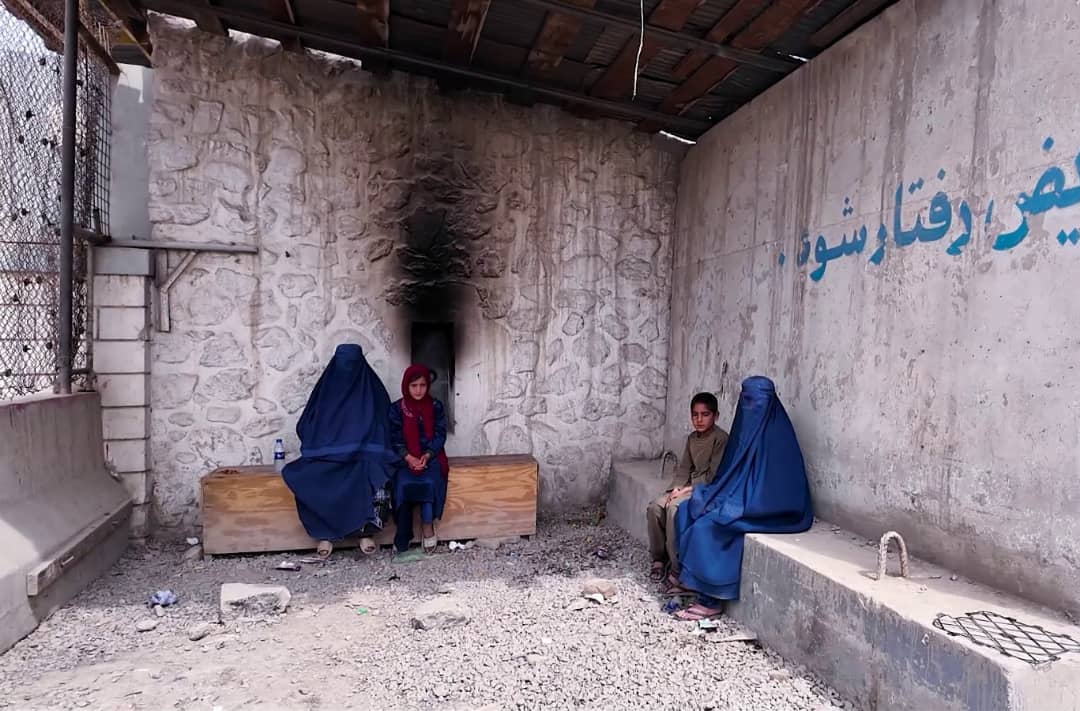
Since returning to power in Afghanistan, the Taliban have publicly flogged hundreds of people, including women, for alleged offences. For women subjected to the punishment, the consequences can continue long after the flogging. They describe stigma, humiliation, family pressure and social isolation following their release.
Kolsum, a pseudonym, is 22. Her real name and province have been withheld due to social sensitivities and concerns for her privacy. She says she was in a relationship with a young man in 2024, and that the two intended to marry.
According to Kolsum, both families had informed the Taliban that the couple were getting to know each other with marriage in mind. Taliban officials, however, told them that because they did not have a marriage contract, their meetings and relationship constituted “zina,” or adultery.
Kolsum spent about two months in Taliban detention before being publicly flogged 39 times. She says she asked officials not to carry out the punishment in public, but her request was denied.
“I spent two months in a Taliban prison, and then they flogged me 39 times in public,” Kolsum says. “Since I was released, my family has not treated me well. They call me an adulterer and a prostitute.”
Kolsum says she encountered dozens of other women in detention who had been arrested on various charges. She alleges that they were not given an opportunity to hire lawyers or defend their cases.
She says Taliban officials told the women they had to be punished so that others would “learn a lesson.”
“We insisted that they not punish us in public,” Kolsum says. “But the Taliban said we had to be punished so that other people in society would learn a lesson from us.”
The flogging has also affected Kolsum’s prospects of marriage. She says several families approached hers with marriage proposals but withdrew after learning that she had been publicly flogged.
She says the stigma following the punishment has made it difficult for her to return to an ordinary social life and has intensified pressure from both her family and the wider community.
Shazia, a pseudonym, is a widowed woman who says she was publicly flogged by the Taliban over allegations of an illicit relationship, failing to observe hijab and going to the market without a male guardian.
According to Shazia, she was shopping with her young daughter when officials from the Taliban’s Ministry for the Propagation of Virtue and Prevention of Vice arrested her. She was later taken to prison and, after some time, publicly flogged over allegations of an illicit relationship and failing to observe hijab.
After her release, Shazia says she faced humiliation, stigma and social pressure and was no longer able to maintain the relationships and routines she had before.
“There is no place in Afghan society for women like us,” Shazia says. “People call me derogatory names, and I live in isolation. I can no longer visit my relatives as I did before, and life has become very difficult.”
Shazia says women detained on similar charges also have limited access to legal representation and opportunities to defend their cases. In some instances, she says, women are pressured into admitting crimes.
“Women who are arrested and imprisoned on one pretext or another are in a very difficult situation,” Shazia says, “because they cannot hire a lawyer for their cases, and in many cases they are forced to admit to a crime.”
Fawzia Danish, a legal affairs expert, says the consequences of public punishment can extend beyond the physical act, particularly for women.
“Publicly punishing people, particularly women, is not a good thing,” Danish says. “Such actions create sensitivities in society.”
A wider pattern of public flogging
The experiences described by Kolsum and Shazia come amid the continued use of public corporal punishment in Afghanistan. According to figures cited by UN experts in March 2026, Afghanistan’s de facto Supreme Court announced that at least 1,110 people were publicly flogged in 2025, including 170 women. In 2024, it announced at least 567 cases, including 87 women.
UN human rights experts have called on the Taliban to halt public corporal punishment and raised concerns about the judicial process through which such sentences are imposed. They have cited concerns including a lack of judicial independence, due-process guarantees and other fundamental safeguards.
The UN experts have also raised concerns about the risks faced by women, girls and LGBT+ members subjected to corporal punishment for so-called “moral” offences, including adultery and “illicit relationships.” They warned that women subjected to such punishment may face additional violence and pressure from their families and communities after the physical punishment has ended.