
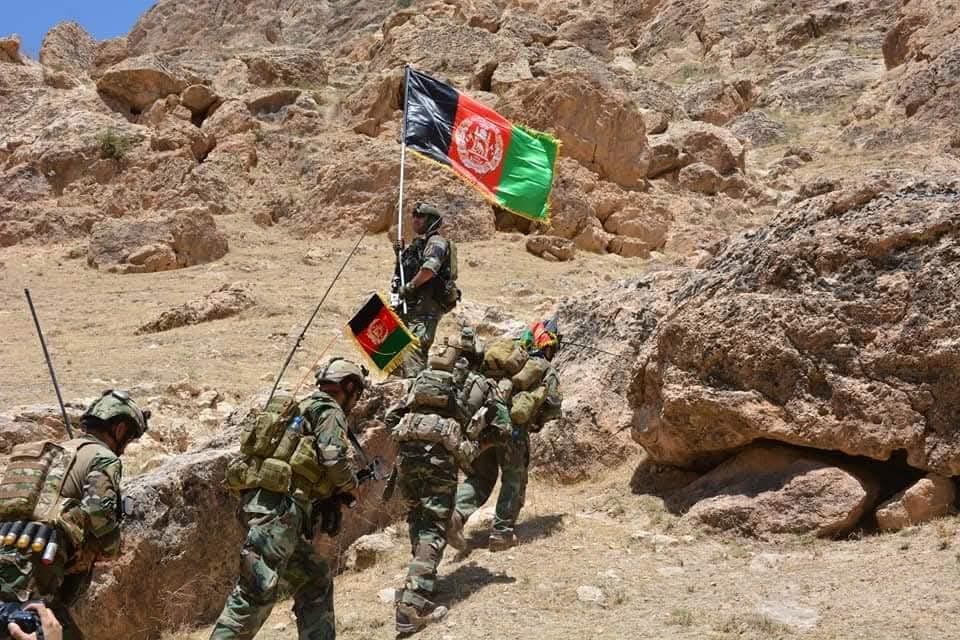
Five years after the Taliban returned to power in Afghanistan, former members of the country’s security forces continue to face arrest, torture, enforced disappearance, and killings despite the Taliban’s repeated promises of a general amnesty.
According to a report by the United Nations Assistance Mission in Afghanistan (UNAMA) covering the period from August 2021 to March 2026, at least 264 former security personnel were killed, 195 were tortured, 621 were arrested, and 15 remain missing.
The report states that those affected had served in the former Afghan government’s national army, police, and other security institutions. Many of them had received specialized military training and participated in counterterrorism operations during the previous government.
Meanwhile, Sami Sadat, a former Afghan army commander and leader of the United Afghanistan Front, said that his organization had documented the killing of 184 former security personnel by the Taliban during the first three months of 2026.
He added that many of those killed had reportedly been subjected to severe torture before their deaths. He also warned that former security personnel deported from Iran and Türkiye face an even greater risk of being targeted after returning to Afghanistan.
Former members of Afghanistan’s security forces say that despite the Taliban’s declaration of a general amnesty after their return to power, arrests, harassment, torture, and persecution of former personnel have continued.
Naqibullah (pseudonym), a former battalion commander in the 201st Selab Corps, says he remains deeply concerned about his security and economic situation under Taliban rule. He says recent reports of former security personnel being killed in several provinces have increased his fears, forcing him to change his place of residence from time to time.
“The Taliban cannot be trusted. On one hand, they speak of amnesty, and on the other hand, they continue killing former security personnel under different pretexts,” he says. “Life has become extremely difficult for former soldiers in Afghanistan because we see death with our own eyes.”
He says that in recent years many of his former military colleagues have been arrested by the Taliban, while some have disappeared.
According to him, the Taliban leader’s general amnesty decree has effectively become a means of identifying and targeting former members of the security forces.
“We have a WhatsApp group for former military colleagues. Over the past five years, the Taliban have imprisoned and killed many of our former soldiers,” he says. “Former security personnel face serious economic and security challenges because no one gives them jobs, and they are living with an uncertain future.”
Another former security force member, Hazrat Mohammad (pseudonym), says that although many former soldiers fled the country to protect their lives, those who trusted the Taliban leader’s general amnesty decree have still faced torture, imprisonment, and even death.
He says he no longer feels safe living in his own country under Taliban rule.
“Life is becoming harder every day. The Taliban raid our homes, we are monitored when we leave our houses, there are no jobs, and economic problems are increasing,” he says. “I have tried twice to travel to Iran through irregular routes, but I was caught on the way both times and forced to return to Afghanistan.”
Mohammad Shafiq (pseudonym), a former Afghan National Army officer who served for years in Helmand, Herat, Mazar-e-Sharif, and Paktika provinces and fought directly against the Taliban, says he was forced to flee to Iran after the Taliban takeover.
He says that after spending two years in Iran, he was arrested by Taliban intelligence forces in Herat while returning to Afghanistan. After eight months in detention, he was released to his family on bail.
He says he was subjected to severe torture while in Taliban custody.
“Former security personnel are treated in an extremely cruel and brutal manner in Taliban prisons. They are subjected to electric shocks, submerged in water, and held in dark rooms,” he says. “Many detainees have also died during torture.”
Although many former members of Afghanistan’s security forces managed to leave the country after the collapse of the former Republic, thousands remain inside Afghanistan. Many continue to face fear of arrest, torture, unemployment, and persecution, while also suffering from psychological distress and uncertainty about their future.
Five years after the Taliban’s return to power, the fate of many former Afghan security personnel remains uncertain, with the promise of amnesty failing to provide a sense of safety for those who stayed behind.