
Table of Contents
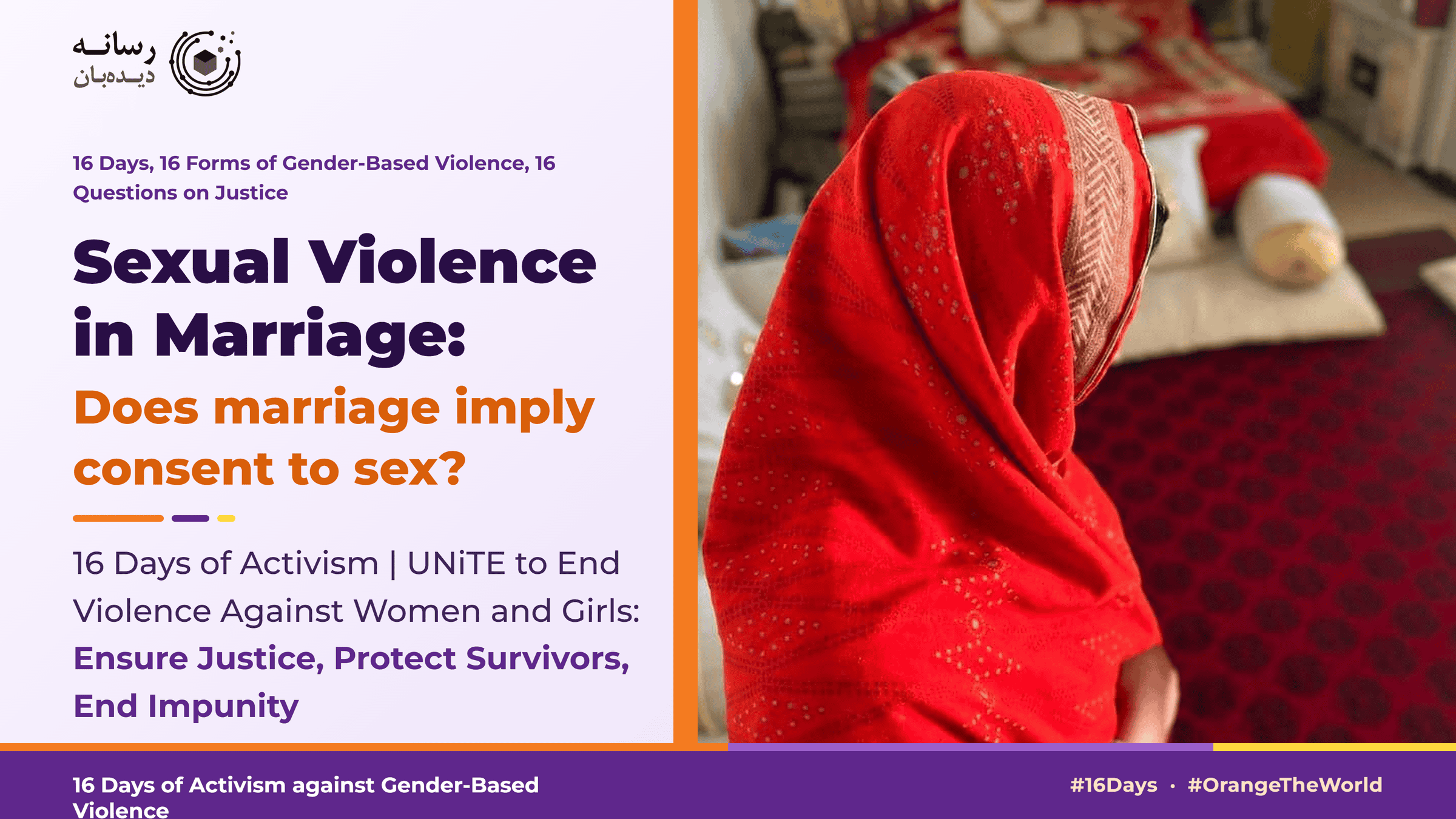
The belief that marriage gives a man a permanent right to his wife’s body makes sexual violence within marriage harder to recognize. A woman’s decision to marry is her consent to the marriage. Sex requires both partners to agree freely each time, and either can withdraw consent at any point.
Sexual violence in marriage includes forcing a wife to have sex or perform other sexual acts against her will. It also includes using threats, physical violence, or the withdrawal of financial support to coerce her, or continuing after she says no or asks to stop. Coercion can leave no visible marks. A woman may feel unable to refuse because she fears harm to herself or her children, the loss of housing or financial support, or her family’s reaction.
What the Survey Found in Afghanistan
In the 2015 Afghanistan Demographic and Health Survey, 7.4 percent of women ages 15 to 49 who had ever been married reported experiencing at least one form of sexual violence by their current or most recent husband.
Across the same group, 5.5 percent said their husband had physically forced them to have sex against their will. 4.7 percent reported being physically forced to perform other unwanted sexual acts, and 3.9 percent reported being compelled to perform unwanted sexual acts through threats or other means.
Where Legal Protection Falls Short
Under the Republic, the 2009 Law on the Elimination of Violence against Women criminalized rape and several other forms of violence against women. The legal definition of rape, however, excluded forced sex within marriage. The U.S. Department of State identified this gap in its 2020 human rights report on Afghanistan.
Legal protections for women have weakened further since the Taliban returned to power. On February 25, 2026, UN Women stated that under Taliban Decree No. 12, a husband can be held criminally liable for violence against his wife only if he causes severe and visible physical injuries. The decree does not prohibit sexual or psychological violence.
What Keeps Women from Seeking Justice?
Women who want to report sexual violence by a husband can face barriers long before a case reaches court.
- Economic dependence. A woman who relies on her husband for income or housing may fear losing the means to meet her basic needs if she files a complaint.
- Family and community pressure. The belief that a wife must meet her husband’s sexual demands can make it harder for her to recognize the abuse or speak out.
- Fear of stigma and blame. A woman may fear being accused of disobedience or immorality, or being blamed for breaking up the family.
- Limited access to support. The closure or weakening of specialized institutions has made it harder for women to obtain legal assistance and pursue a complaint.
- Barriers to reporting safely. UN Women warned that women must prove abuse before a male judge while accompanied by a mahram, or male guardian, who may himself be the abuser.
In its January 22, 2026 report, the European Union Agency for Asylum documented the dismantling of specialized institutions that supported women, the absence of women judges and prosecutors, and the closure of nearly all shelters for survivors of gender-based violence. It also reported that cases of violence were often handled through mediation.
A woman who reports sexual violence by her husband may be encouraged to return to him or settle the matter within the family. That can leave her without an independent hearing or any assurance that she will be safe and able to make her own decisions.
Conclusion
Access to justice means a woman can seek support and have her complaint heard without fear of punishment, rejection, or losing the housing and financial support she depends on. When those options are out of reach, abuse can continue behind closed doors.