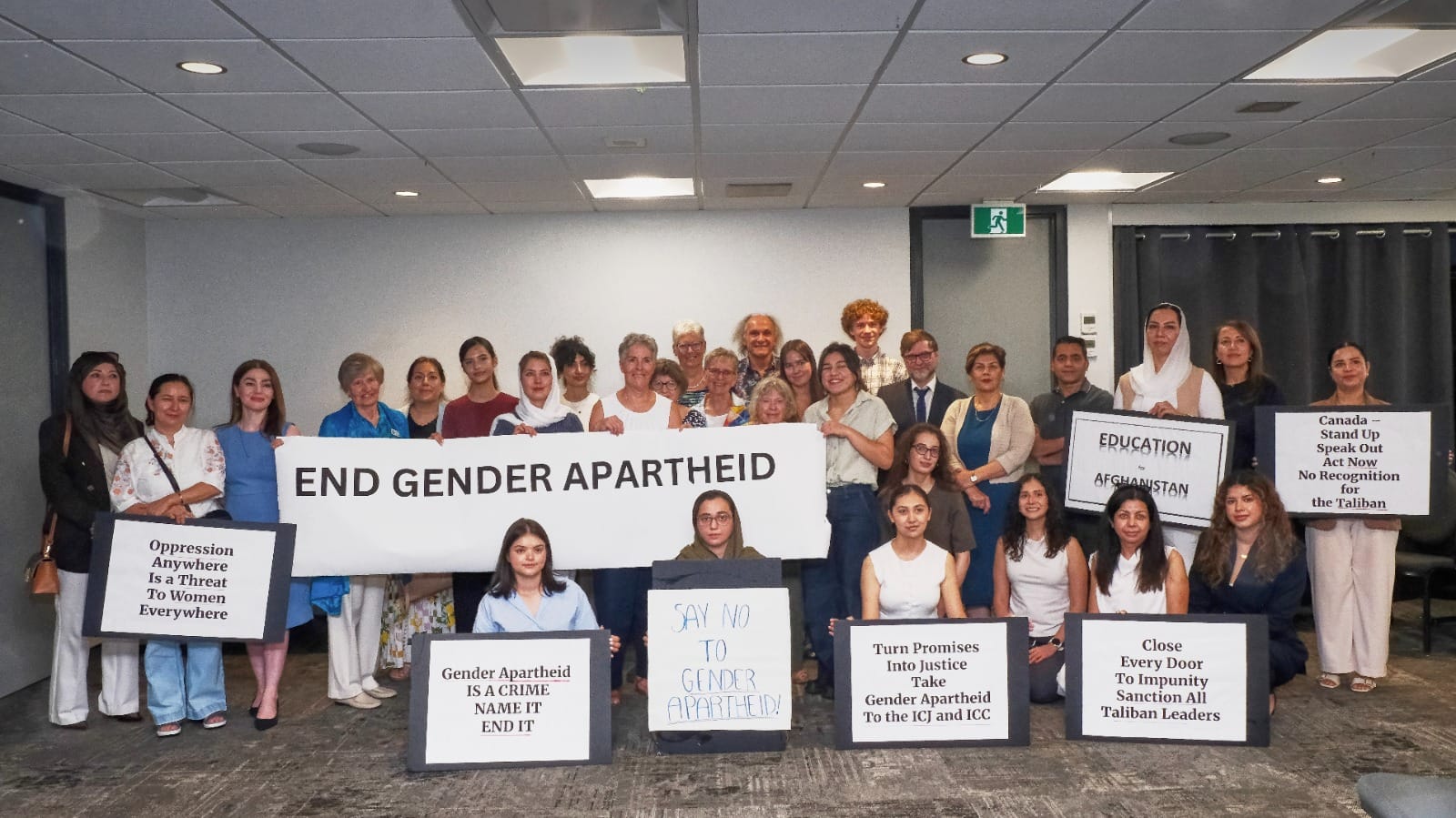
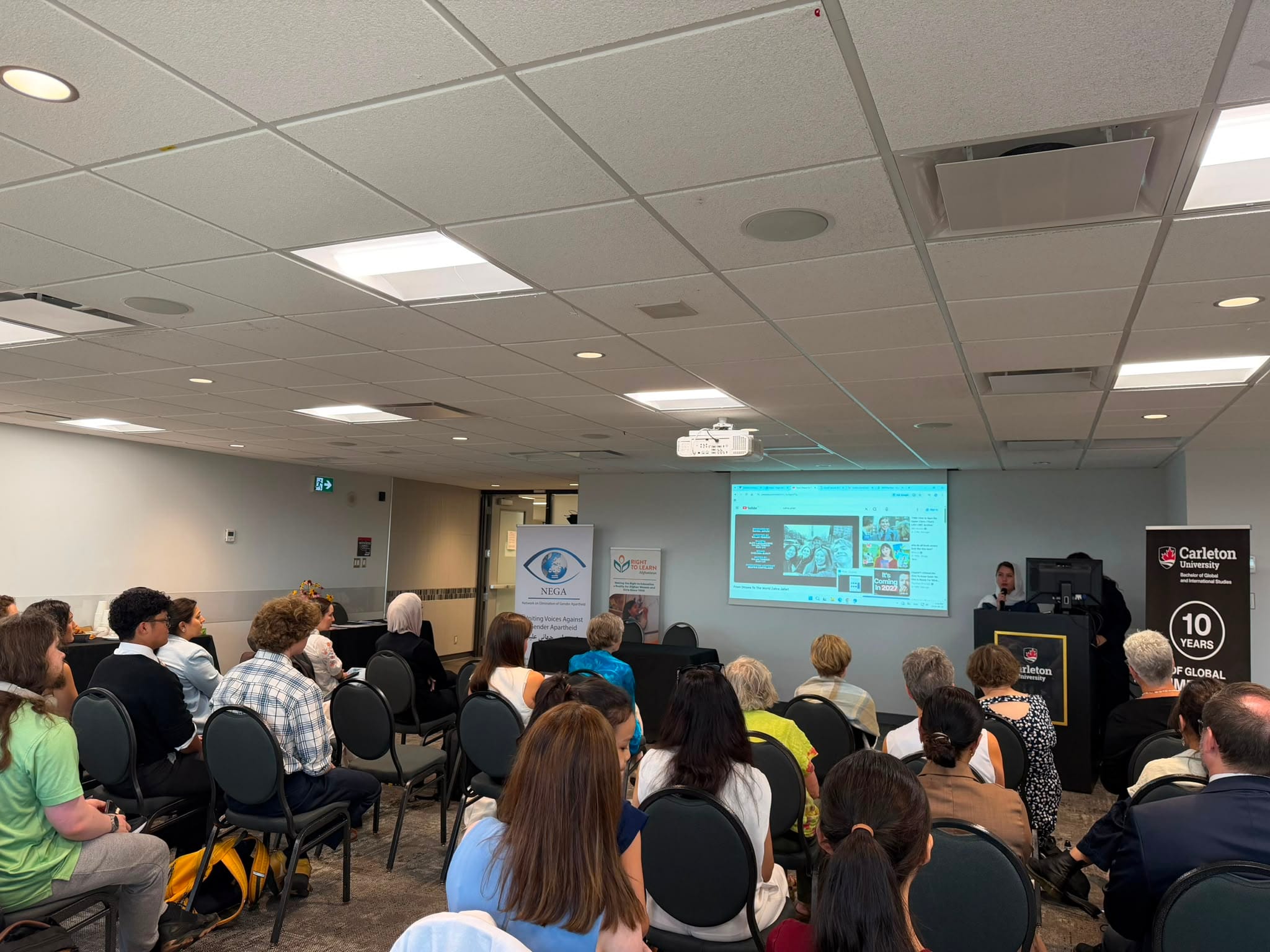
Ottawa, August 13, 2026: Academics, legal experts and women’s rights advocates gathered at Carleton University in Ottawa to discuss efforts to recognize gender apartheid as a crime against humanity under international law, five years after the Taliban returned to power in Afghanistan.
The event, titled “From Declaration to Action: Advancing the Recognition of Gender Apartheid as a Crime Against Humanity,” brought together scholars, activists, students and civil society representatives to examine an international declaration by legal experts and the path toward recognizing gender apartheid in international law.
The event was organized in partnership with Carleton’s Bachelor of Global and International Studies (BGInS), the Network to End Gender Apartheid (NEGA), Women Living Under Muslim Laws (WLUML), The Rights Monitor Media (R.M Media) and the Ottawa chapter of Right to Learn Afghanistan.
The program opened with remarks by Professor Neil Gerlach, director of BGInS, and Jennifer Simpson, co-chair of Right to Learn Afghanistan’s Ottawa chapter. It was followed by a screening of “From Ottawa to the World,” a short documentary by Afghan filmmaker and women’s rights advocate Zahra Jafari.
In a session titled “Two Lives, Two Realities,” Sughra Saadat, founder and president of the Afghan Women’s Foundation, and Madina Mashkouri, a Carleton BGInS graduate, discussed the contrast between opportunities available to Afghan women in Canada and the restrictions facing women inside Afghanistan.
The main legal discussion featured Professor Doris Buss of Carleton University. She examined the capacity of international law to respond to systematic discrimination against women and highlighted the role of women’s movements in shaping its development.
Buss pointed to campaigns that helped secure international recognition of rape and sexual violence as examples of how sustained advocacy can change international law. She said efforts to recognize gender apartheid could similarly contribute to its evolution.
Professor Karima Bennoune, a University of Michigan law professor and former UN Special Rapporteur on cultural rights, also addressed the development and significance of the international experts’ declaration in a video message.
The event concluded with calls for continued international advocacy. Najia Hanifi, co-chair of NEGA, warned against allowing the systematic repression of Afghan women and girls to become normalized over time.
Hanifi urged Canada to take a leading role in advancing recognition of gender apartheid under international law, stressing that five years of Taliban rule should not mean growing international acceptance of the exclusion and oppression of women.