
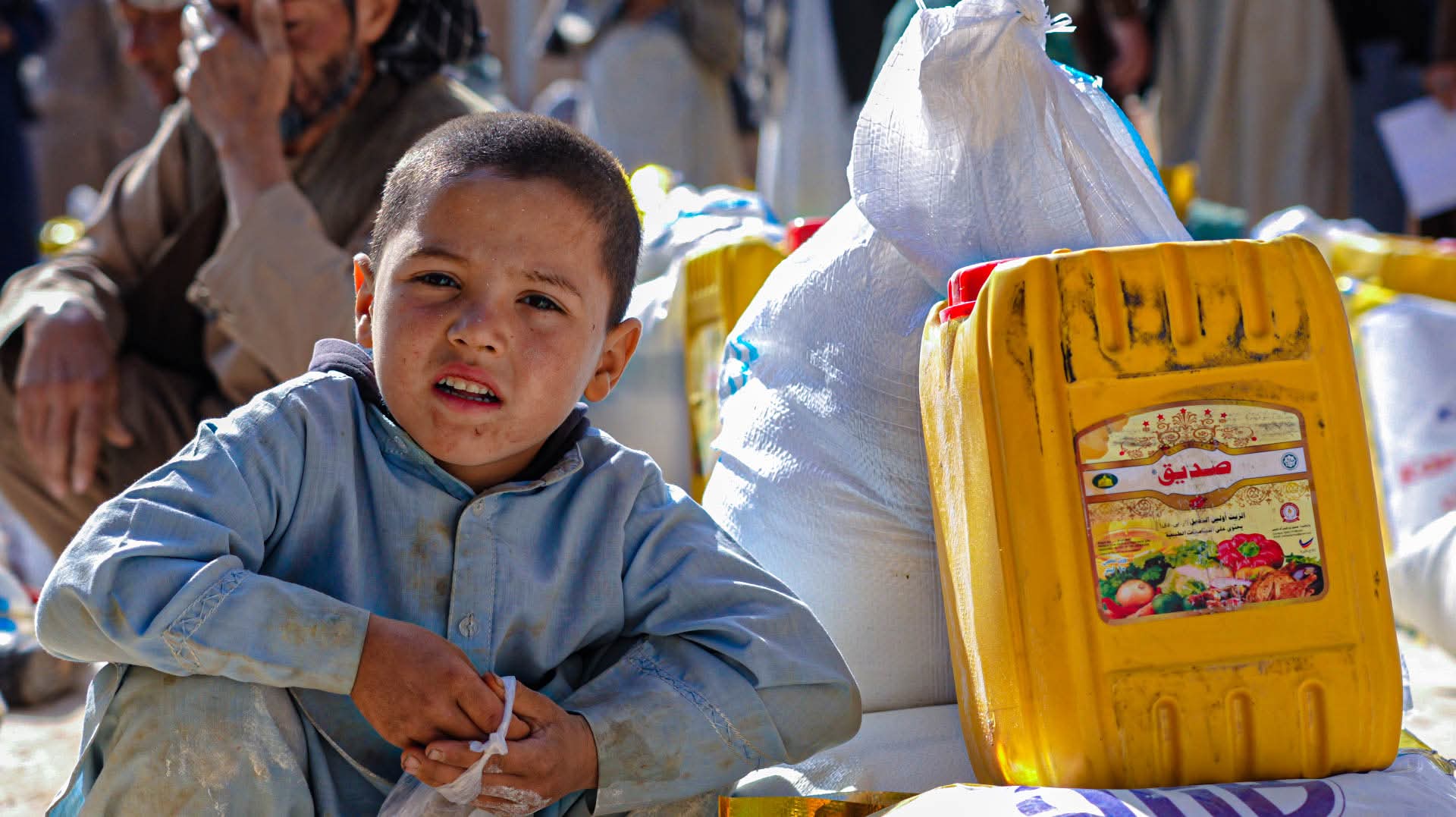
Five years after the Taliban returned to power, Afghanistan continues to face a deepening humanitarian crisis driven by poverty, unemployment, drought, and declining international humanitarian assistance. Millions of Afghans, particularly children under the age of five, remain at serious risk of hunger and severe malnutrition as many families struggle to provide sufficient and nutritious food for their children. Thousands of households living in poverty, along with children returning from migration and those who lack access to adequate breast milk or supplementary nutrition, are among the groups most affected by the crisis.
Shabana, a returnee from Pakistan who came back through the Torkham border crossing to Nangarhar province, says she and her one-and-a-half-year-old daughter have been suffering from malnutrition due to a lack of adequate food since their return nearly eight months ago.
She says:
“It has been almost a year since we have eaten enough food. Because of severe hunger, my breast milk dried up, and that is why my daughter has become physically weak and underdeveloped. I have taken her to the hospital several times for treatment, but they only provide us with nutritional supplements.”
Shabana says that although she uses the nutritional supplements, known locally as Kakoo, provided by health centres, poverty, forced displacement, loss of appetite, severe anxiety, and uncertainty about the future remain the main factors behind her and her child’s malnutrition.
She adds:
“Our lives are getting worse every day because everything we had was left behind in Pakistan. There have been many times when we have gone to sleep hungry. My husband is also unemployed, and often villagers help us. Otherwise, we have no one to rely on except God.”
Other families report similar difficulties, saying unemployment and economic hardship have left them unable to provide enough healthy food for their children, contributing to the growing number of malnutrition cases among children.
Zainab, a mother supporting a poor household, says her five-year-old daughter Maryam is suffering from malnutrition and faces several health problems. She says Maryam becomes tired quickly while playing, suffers from low blood levels, and has increasingly lost her appetite.
Zainab says:
“I take care of four children. My husband died two years ago. I was also a teacher, but I lost my job. We are no longer able to eat as we did in the past. Now I wash people’s clothes, and I earn between 60 and 100 Afghanis a day, but this income is not enough to support our family.”
Meanwhile, the United Nations Children’s Fund (UNICEF) has warned in its latest report that in 2026, around 3.7 million children under the age of five in Afghanistan are at serious and growing risk of malnutrition.
The report states that Afghanistan has faced severe drought, poverty, unemployment, and declining humanitarian assistance in recent years, conditions that have placed millions of people, especially young children, at increased risk of hunger and severe malnutrition.
UNICEF has expressed concern that the crisis threatens not only children’s physical health but also their cognitive development, education, and future opportunities.
Decades of conflict, economic challenges, widespread displacement, reduced humanitarian aid, limited access to healthcare services, lack of awareness, and poor compliance with health and hygiene practices are among the factors contributing to increasing child hunger and malnutrition in Afghanistan.
Five years into Taliban rule, child malnutrition remains one of Afghanistan’s most serious humanitarian challenges, a crisis with consequences which extend beyond the present generation and threaten the health and future of Afghan children for years to come.